USM, PEMSEA, DID AND LSANK FORGE STRATEGIC COLLABORATION TO STRENGTHEN KEDAH RIVER BASIN MANAGEMENT
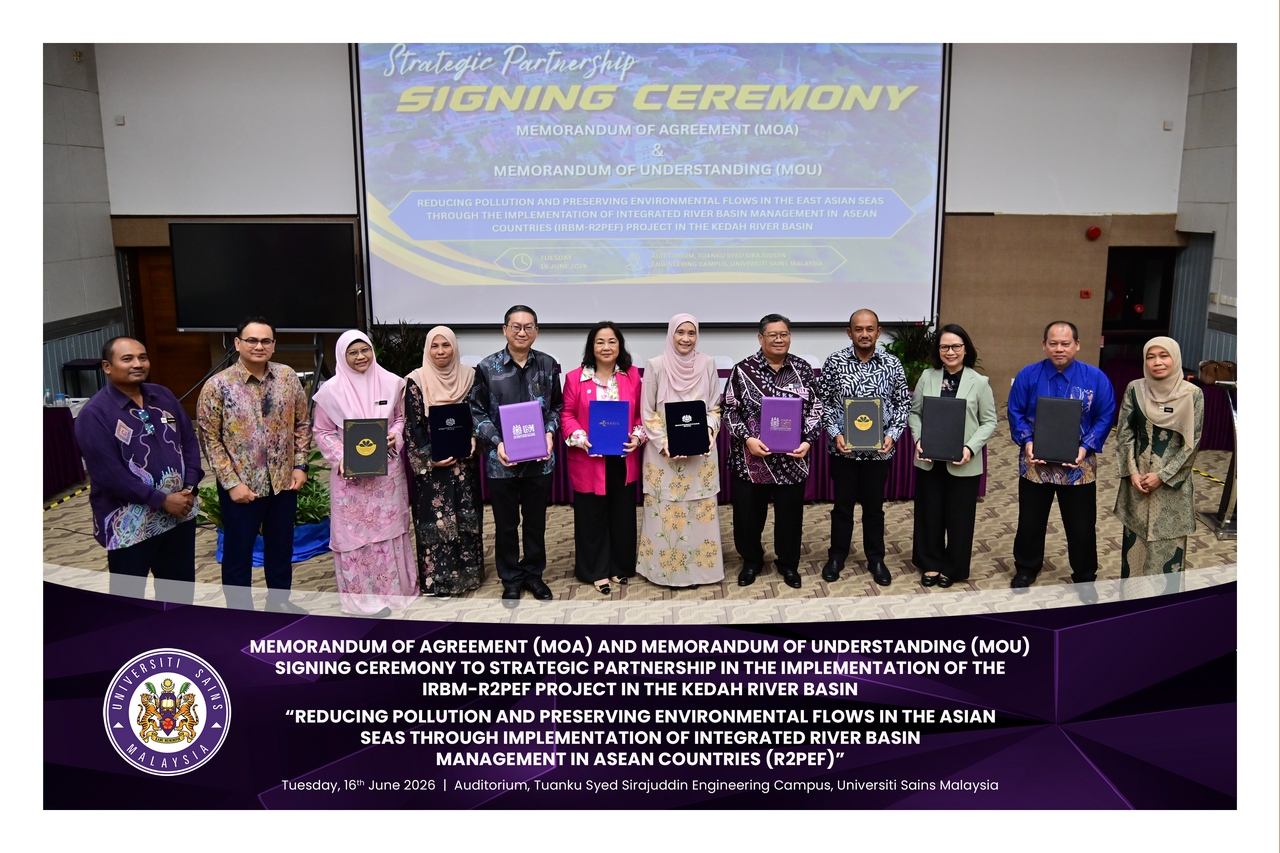
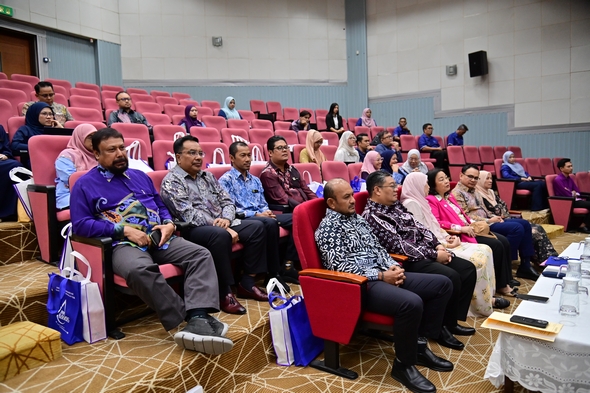
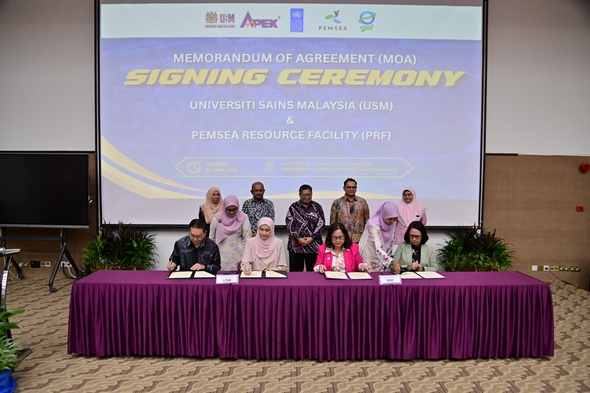
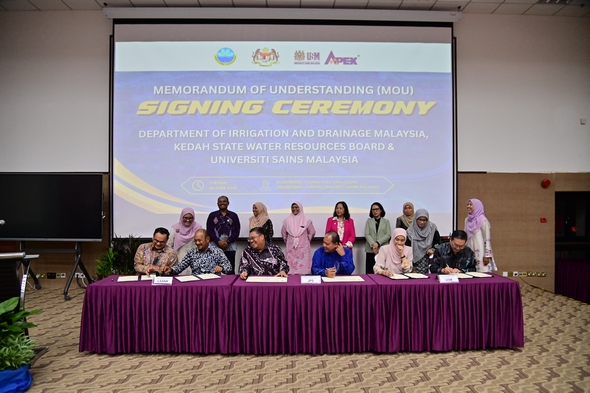
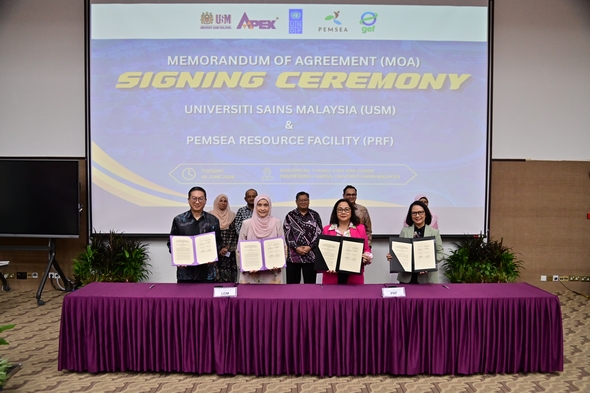
NIBONG TEBAL, 16 June 2026 - Universiti Sains Malaysia (USM), together with PEMSEA Resource Facility (PRF), the Department of Irrigation and Drainage Malaysia (DID), and the Kedah State Water Resources Board (LSANK), today formalised a strategic collaboration for the implementation of the project entitled “Reducing Pollution and Preserving Environmental Flows in the East Asian Seas through the Implementation of Integrated River Basin Management (IRBM) in ASEAN Countries” (IRBM-R2PEF) in the Kedah River Basin.
The ceremony involved the signing of a Memorandum of Agreement (MoA) between PRF and USM, as well as a Memorandum of Understanding (MoU) among USM, LSANK and DID to strengthen efforts towards integrated and sustainable water resources management.
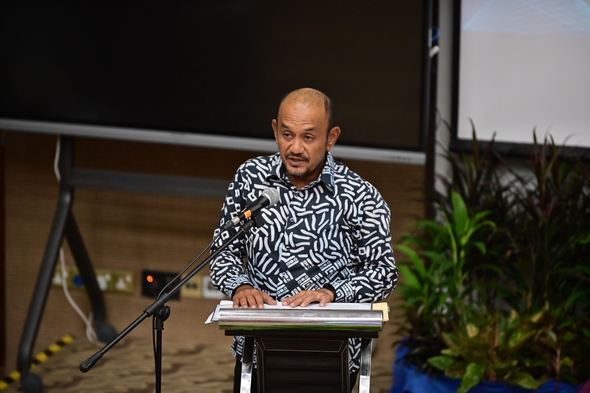
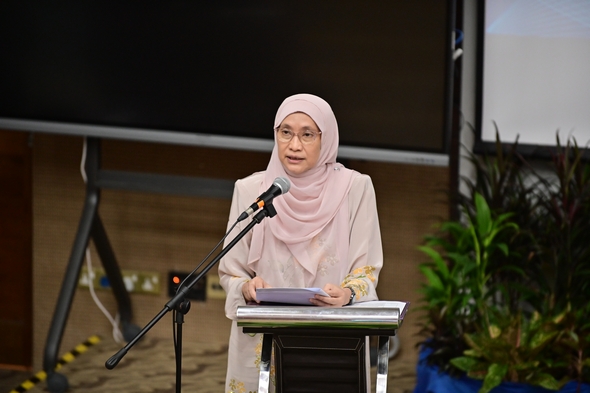
Director of the Tuanku Syed Sirajuddin Engineering Campus, Professor Ir. Dr. Mariatti Jaafar @ Mustapha, who represented the USM Vice-Chancellor, said that through the MoA and MoU, the River Engineering and Urban Drainage Research Centre (REDAC), USM, will serve as the implementing institution for the IRBM-R2PEF project.
According to her, the project, which is fully funded by the Global Environment Facility (GEF), United Nations Development Programme (UNDP) and The Association of Southeast Asian Nations (ASEAN) with a total allocation of USD500,000, will be implemented in the Kedah River Basin from 1 July 2026 until 31 December 2027.
“Among the key components of this project are the development of IRBM implementation mechanisms, preparation of baseline assessments and the State of River Basin Report, formulation of a Strategic Action Plan, implementation of pilot projects, as well as monitoring and evaluation systems,” she said.
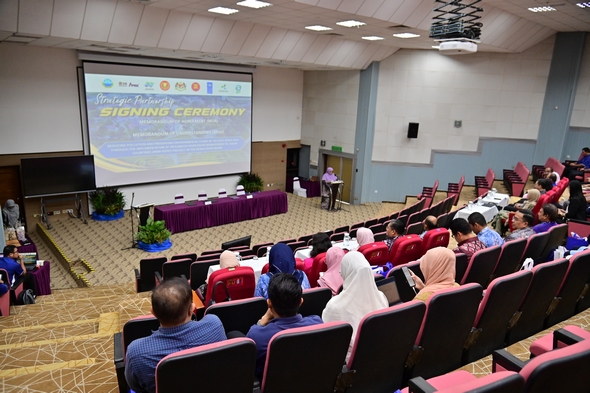
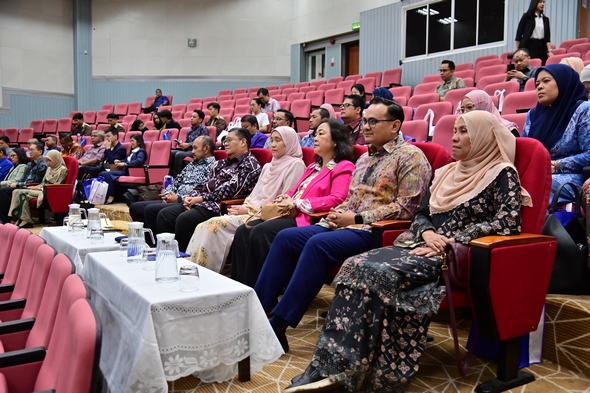
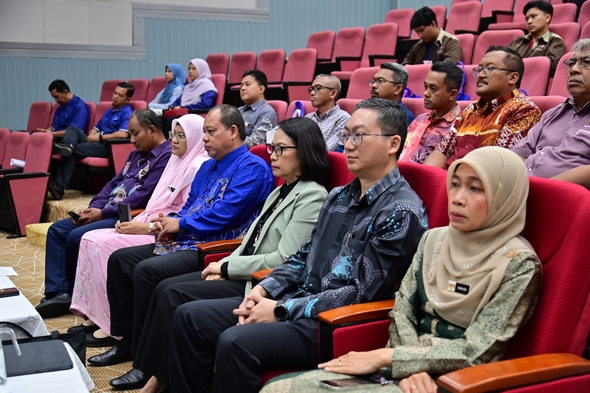
She said the collaboration with DID Malaysia and LSANK was not new, but rather built upon longstanding partnerships, mutual trust, and shared expertise.
“USM greatly appreciates the continuous support from DID, particularly through the Bio-Ecological Drainage System (BIOECODS) research initiative and various other collaborative efforts that contribute towards sustainable water resources management,” she said.
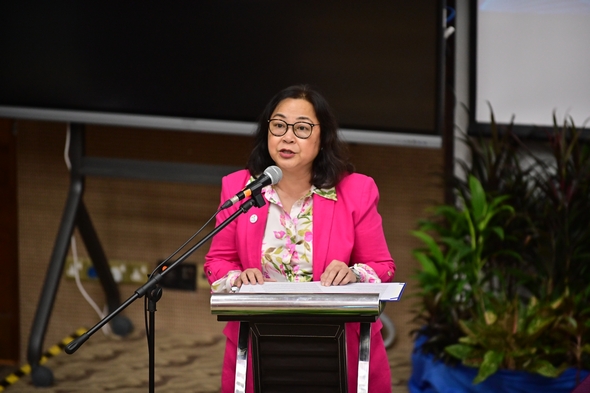
Meanwhile, Executive Director of PEMSEA Resource Facility, Ms. Aimee Gonzales, said PEMSEA, through the IRBM-R2PEF project, is ready to support Malaysia in implementing the activities and project deliverables as agreed under the MoA.
“This project focuses on four key objectives, namely ensuring sufficient water availability, ensuring clean water, reducing flood risks, and enhancing environmental conservation,” she said.
She said the preparation of the State of River Basin Report for the Kedah River and the implementation of pilot projects through innovative technologies would help address key river basin management issues while creating investment opportunities to sustain the outcomes of this collaboration.
She also emphasised that the project has the potential to become a catalyst for broader cooperation in advancing the “Source to Sea” concept in the East Asian Seas region.
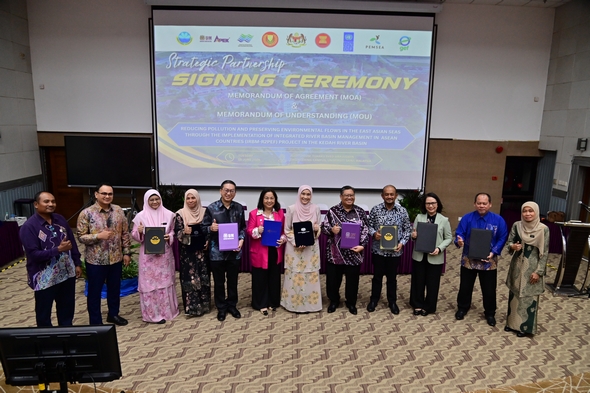
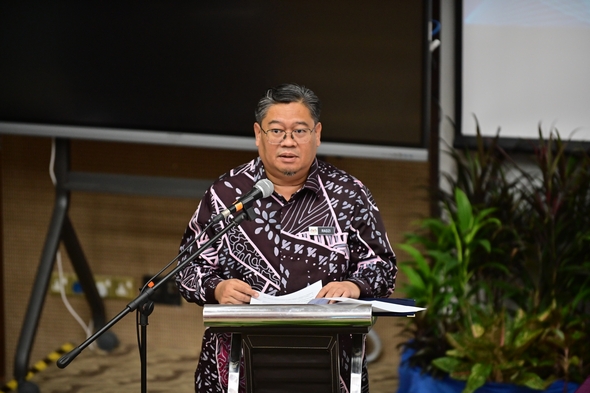
Director General of the Department of Irrigation and Drainage Malaysia, Datuk Ir. Mohamad Radzi Abdul Talib, said the collaboration between USM, LSANK and DID combines the strengths of three key partners, namely knowledge, research, and innovation from USM; state leadership and governance from LSANK; as well as technical expertise and national coordination from DID.
“Water-related challenges are becoming increasingly complex as climate change affects rainfall patterns, floods and droughts occur more frequently, while river pollution continues to put pressure on water resources,” he said.
He said that since rivers do not follow administrative boundaries, cross-agency collaboration is essential to ensure effective and sustainable water resources management.
Meanwhile, Director of LSANK, Syed Amaluddin Hafeez Syed Musa, said the Kedah River is a strategic state asset that supports various sectors including water supply, agriculture, economic activities and community livelihoods.
“The Kedah River Basin faces various challenges including pollution, sedimentation, monsoon flood risks and development pressures. Therefore, an integrated river basin management approach is crucial to ensure that this water resource is sustainably managed and preserved,” he said.
He said the implementation of this project is expected to strengthen river basin governance, improve water quality, conserve ecosystems, and reduce water-related risks.
Text: Siti Faizah Abd Halim/Photo: Muhammad Taufik Abd Rahman